

CycloneDX Schema Patch: A Valid File Is Not a Full Inventory
2026-11-02
CycloneDX Schema Patch: A Valid File Is Not a Full Inventory
A software inventory document can satisfy a format check while still leaving a transaction question unanswered. That distinction is useful when reading schema-maintenance news. CycloneDX’s September 2026 schema patch provides a specific example for a robot software handoff. This article checks the official release record and specification overview on November 2, 2026. It discusses a fictional document review, without validating a real file or deciding whether a seller’s inventory is complete.
The patch record describes a particular schema correction
The official CycloneDX 1.7.2 release record, dated September 17, 2026, describes an XML schema alignment correction involving related cryptographic assets. The specification overview separately identifies the 1.7 specification and its supported representation context. The patch label and the main specification label therefore need their own explanation.
This article does not claim that every inventory requires the corrected feature. The release note identifies a specific change, not a reason to rewrite every software handoff. A reader should connect the change to the actual document and representation under discussion before drawing a local conclusion.
A format question and an inventory question can coexist
Imagine a fictional robot software delivery containing a bill of materials. One reviewer asks whether the document conforms to the selected schema. Another asks whether the document describes the exact package included in the delivery. Both questions can matter, but answering one does not automatically answer the other.
A schema result concerns the document under a particular checking context. Coverage concerns what the document represents relative to the agreed software object. A report should not substitute a format result for a supplier’s explanation of that relationship. Our example supplies no real component list or validator output.

The distinction remains useful even when a tool displays a reassuring status. The reviewer should read what the status actually means. A broad “accepted” label could hide whether the tool checked syntax, selected structural rules, or something else. The article does not assume a particular tool’s capabilities.
Retain the schema identity behind a result
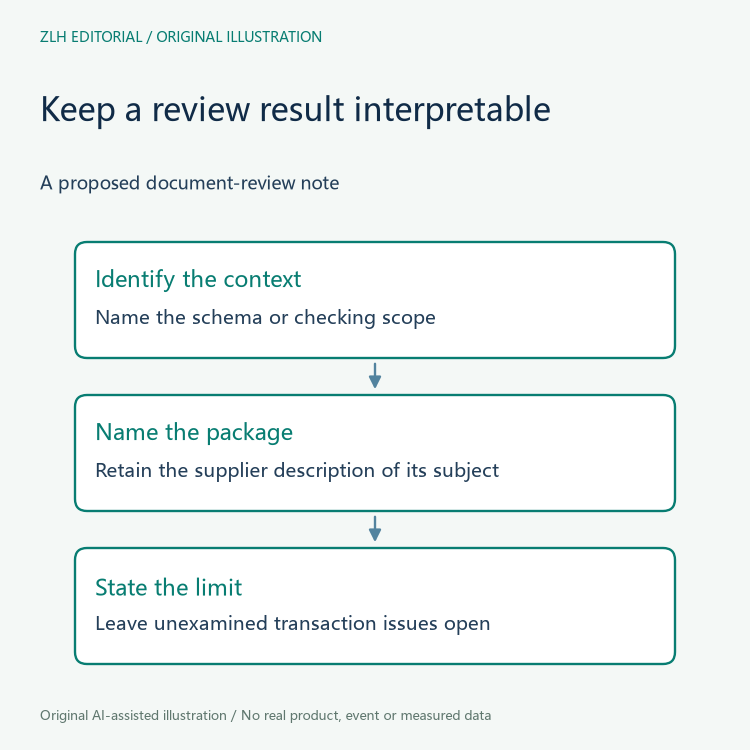
If a real review is later performed, its record should identify the schema or checking context used. Otherwise a later colleague may be unable to understand why two tools or two review dates produced different observations. This is a proposed documentation practice for the fictional handoff.
A patch announcement can motivate checking that context, but it cannot explain an actual discrepancy that has not been investigated. The team should not guess that every difference is caused by the patch. It can preserve the observed difference and ask which rule or representation is relevant.
The team should also avoid changing the document merely to obtain a desired status without understanding the meaning of the edit. A structurally acceptable change could alter the claim being made. This article supplies no commands, edits, or instructions for modifying a seller’s real inventory.
Ask the supplier to explain the represented package
For the coverage question, the fictional recipient could request a clear description of the software object the document concerns. That explanation should relate the inventory to the actual handoff. A format’s expressive ability does not prove that the author used it to describe every relevant component.
An unresolved relationship can remain open in the handoff note. It should not be filled with invented component identities or a claim that an inspection was completed. The note can identify the missing explanation and the party who can provide it without making a broader accusation about the seller.
Keep transaction conclusions proportionate to the review
A format check is useful evidence at its own scope. It is not a universal approval of a robot, its software behavior, licensing arrangements, or the transaction itself. Those questions need the appropriate material and responsible review. The article offers no legal or purchasing conclusion.
A clear summary can therefore state what was checked, what package the document claims to describe, and what remains unexamined. If only the release note was read, the summary should say so. News reading does not create a local validation result.
The schema patch is most informative when it improves the precision of these questions. It helps an editor identify the format context while leaving inventory meaning attached to the actual supplied software. That preserves the value of both the format check and the provider’s substantive explanation.
When the fictional recipient shares its review note, the label should travel with the result. A narrow format observation can otherwise acquire a broader meaning as it moves between teams. Retaining the checking scope prevents that accidental expansion without requiring anyone to invent additional technical findings.
Related topics appear in our robot trading documentation section, with more articles in the reading directory. The original diagrams contain no real inventory, validator status, component data, or transaction approval.


