

Python 3.15 News: A Frozen Mapping Needs a Record Context
2026-11-03
Python 3.15 News: A Frozen Mapping Needs a Record Context
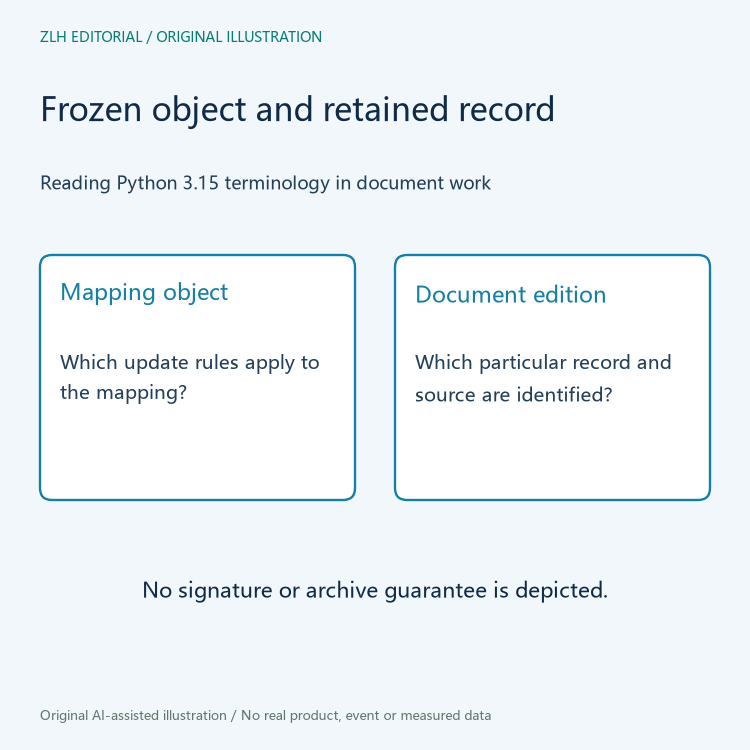
A software object described as frozen can sound more permanent than the document workflow around it. Python 3.15 adds a built-in immutable mapping, which makes the terminology worth reading carefully in robot trade document discussions. An object's update rules concern a programming representation. A record's edition, source and subsequent correction need their own explanation. Treating the two as the same would give a technical feature a documentary meaning that it does not establish.
Locate the October language feature
The Python 3.15.0 release page dates the release to October 9, 2026 and lists the new frozendict built-in among its language features. The page now also points to a later maintenance release. This article discusses the feature introduced in the series; it does not recommend installing the original release or assert which runtime a document provider uses.
PEP 814 describes the immutable mapping and explains that construction from a dictionary makes a shallow copy. That scope matters: a feature controlling a mapping's structure is not a certification of every referenced object or a permanent archive policy. The proposal is a source for the programming concept, not proof about an actual trade document system.
Ask what the document tool is actually preserving
Imagine a hypothetical provider saying that an offer summary is stored in an immutable mapping. A recipient could ask what that statement means for the particular summary supplied. Does it identify the software representation used while preparing an output, or describe a retained document edition? The provider should explain the relationship rather than expecting a programming term to answer the recipient's recordkeeping question.
The recipient can separately ask how the edition is identified and which source supplied its statements. These questions do not require a legal interpretation of an offer or a recommendation about contract terms. They concern the ability to recognize the particular document being discussed. This article has not reviewed a real transaction, created a frozen object or inspected a supplier's implementation.
Keep a clear distinction between an explanation of software behavior and an observation about a delivered file. A provider may describe the design of a tool without having supplied evidence about a particular output. The handover record should say which kind of information was received. A confident design description should not quietly become a statement that every document edition has been preserved.
Corrections need a visible relationship to earlier editions
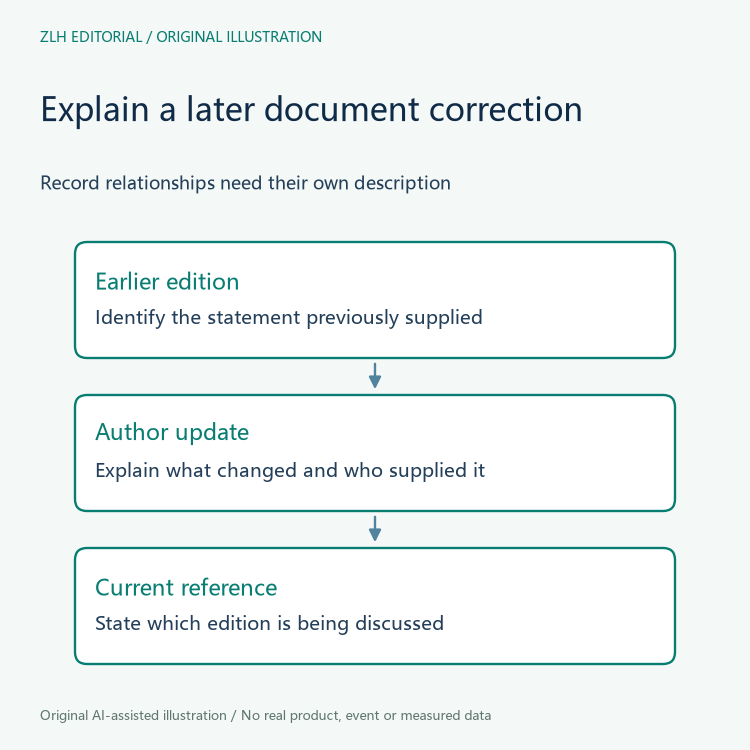
If a document author later corrects a summary, the recipient needs to know what changed and which edition the correction concerns. A programming object's immutability does not decide how an organization identifies or communicates that correction. The parties maintaining the documents must supply their own explanation of editions and references. Avoid inferring that process from the word frozen in a technical note.
A useful correction record can point back to the earlier statement, explain the new one and identify the author of the update. It should not obscure whether the earlier document remains relevant to a historical discussion. This is a general documentation approach, not a finding that any party supplied inaccurate material. The example contains no equipment price, serial number or ownership claim.
Do not borrow stronger guarantees from a type name
An immutable mapping is not by itself a digital signature, evidence of authorship or a storage guarantee. Those topics involve different mechanisms and documentation. The same caution applies in the other direction: a record with a clear edition and source does not tell a reader which internal data structure created it. Explain each claim at the level where evidence exists.
This distinction allows the software news to remain useful. A development team may consider the feature in its own authorized engineering work, while document recipients can ask for the specific record information they need. The news article need not invent a deployment, promise that documents cannot be changed or prescribe an update to a production trading application.
Keep the feature and the record in a clear relationship
The October language release introduces a particular representation capability. Its editorial relevance here is to prevent that capability from being mistaken for an entire document preservation process. A precise explanation can identify what is frozen in software and separately describe which record edition is retained. Each statement then has an appropriate subject and source.
The two original illustrations show this relationship without actual trade documents or program output. Further reading appears in our robot trade document collection and article directory. Readers should be able to identify a document's origin and edition without relying on an implementation label to supply guarantees that were never documented.


