

Robot Trade HTTP Language FAQ: Read the Field Roles
2026-11-05
Robot Trade HTTP Language FAQ: Read the Field Roles
HTTP language fields in a robot trade document record need their message context. A preference sent by a client and an audience description attached to a representation answer different questions. Treating their values as interchangeable can turn a download record into an unsupported statement about translation or document availability. This FAQ reads the relevant RFCs through a hypothetical document exchange. It does not contact a trade portal, request a different language version or assess an actual shipping or acceptance document.
What does the request preference express?
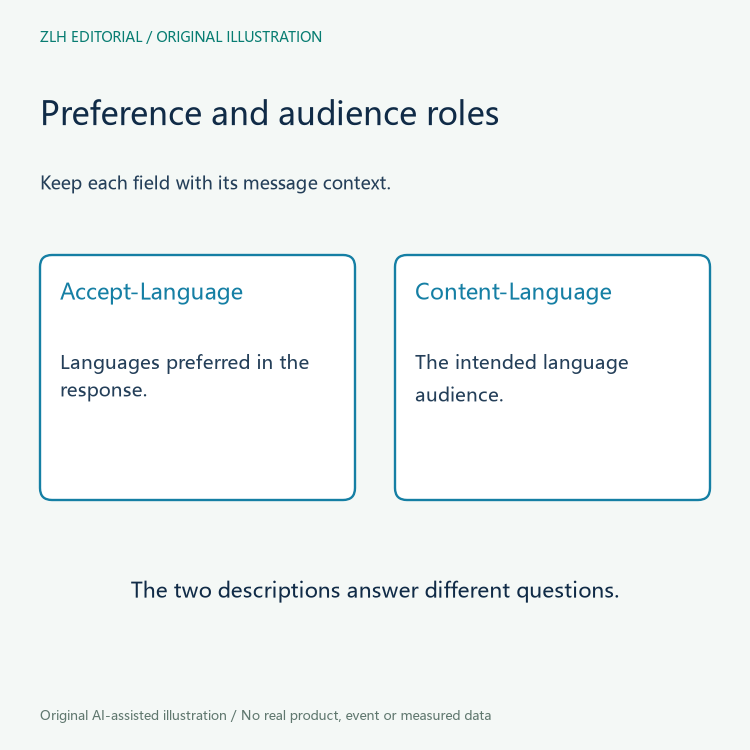
RFC 9110, HTTP Semantics, defines Accept-Language as a way for a user agent to indicate natural languages preferred in a response. The field uses language ranges with optional weights. That describes a request preference; the field alone does not identify which document was returned, whether a translation exists or whether the server selected content using that preference.
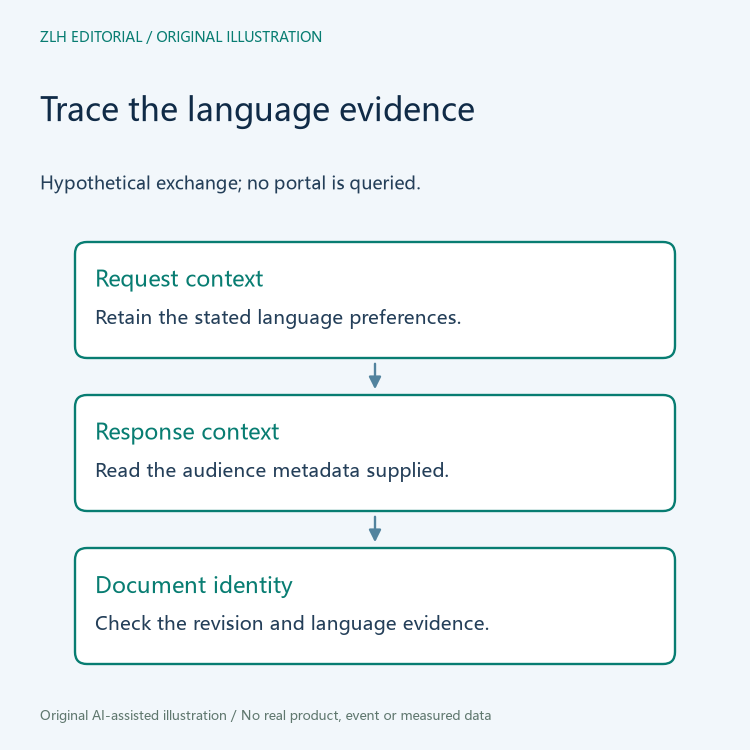
In the hypothetical exchange, a client record might retain a language preference alongside a downloaded robot manual. Preserve the preference with the request that carried it. Then examine the actual response and the document identity separately. Copying a requested language into a spreadsheet column labeled document language would skip the very evidence needed to explain the delivered file. A preference is useful context but not a substitute for inspecting the representation.
What does the representation's audience field mean?
RFC 9110 defines Content-Language as describing the natural languages of the representation's intended audience. It explicitly distinguishes this from a list of all languages appearing in the content. A document can contain material in more than one language while targeting a particular language audience. The metadata should therefore retain its stated purpose rather than be presented as a complete text-language inventory.
For a hypothetical trade pack, keep the Content-Language value with the specific representation from which it was supplied. If it is absent, the RFC describes a default audience interpretation, which can include a sender that does not know the intended language. Absence should not be turned into proof that every user can understand the document. Nor does the field establish that terminology, diagrams or commercial wording have been translated accurately.
How should preferences and matching be documented?
RFC 4647, Matching of Language Tags, distinguishes language ranges, priority lists and matching schemes. It describes filtering, which can produce a set, and lookup, which selects a single result. RFC 9110 refers to that matching framework for Accept-Language. A review should identify the server's supplied selection explanation rather than infer one universal algorithm from the presence of a language range.
The HTTP specification also warns that the order of entries with equal quality values is not a reliable indication of priority. In a hypothetical record, retain the complete field value, including weights, rather than only the first token. Do not announce that a particular document must have been chosen from that order alone. A claim about observed selection requires the relevant request, response and available representations, not simply a plausible reading of a preference list.
Does a language field establish the commercial version?
A language label does not identify which revision of a trade document governs a supplied process. A hypothetical manual, packing list and acceptance document can have different authors, revisions and purposes even when their language metadata matches. Preserve the document identity, revision and relationship to the trade file separately. The RFCs define HTTP semantics; they do not assign commercial authority to a translation or settle differences between contractual texts.
If a provider later supplies a different language version, retain the original and the explanation connecting the two. Do not overwrite a previously received file and then claim the record always contained the replacement. A useful revision note identifies the newly supplied representation and the unresolved equivalence questions. This article makes no legal determination and has compared no pair of translated trade documents.
What belongs in a bounded document record?
Retain the request context, complete language-preference field if supplied, response metadata, file identity and the provider's language-version explanation. If a record has only a filename with a language-like suffix, state that limited evidence instead of inventing an HTTP exchange. Conversely, a response field should not erase what the document itself says about revision and intended use. Each item belongs with the source that actually supplied it.
When a fictional reviewer compares two download records, the finding can say which fields differ and which documents were associated with them. It cannot infer that either file was mistranslated, replaced or accepted by a counterparty without evidence of that event. The original illustrations show documentation roles only. They include no real server trace, transaction or claimed language negotiation result.
Further reading is available in the technical material category and related resource category. Reading HTTP language preferences and audience descriptions within their own message roles helps a robot trade file retain exactly what was requested, what was supplied and what still needs document-level confirmation.


